Shockwave Therapy vs Surgery: Making the Right Choice
Comparing non-invasive shockwave therapy with surgical options. Understand the pros, cons, and when each treatment is appropriate.
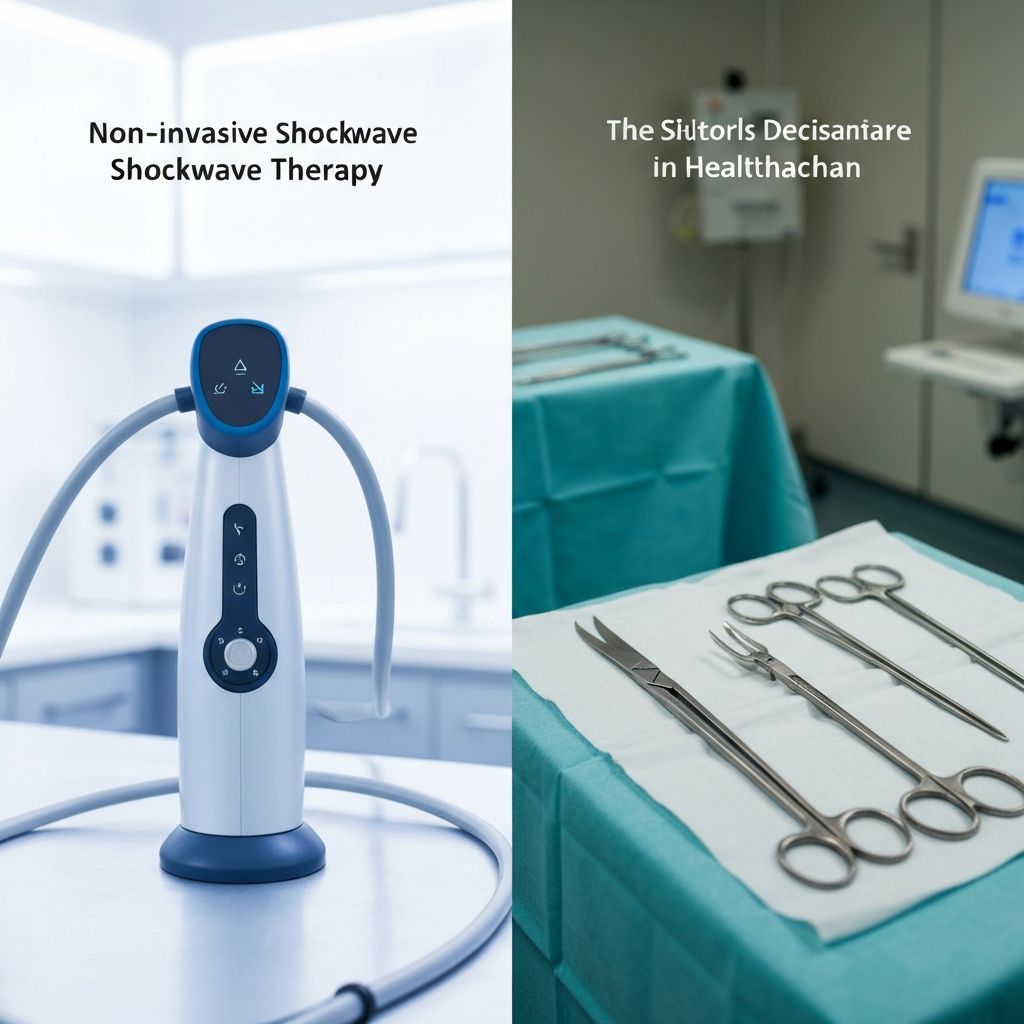
When facing a chronic musculoskeletal condition, patients often find themselves weighing their treatment options carefully. Two common paths are shockwave therapy and surgical intervention. Understanding the differences between these approaches can help you make an informed decision about your care.
Shockwave therapy is a non-invasive treatment that uses acoustic waves to stimulate healing. It requires no incisions, no anesthesia, and no hospital stay. Surgery, on the other hand, is an invasive procedure that physically repairs or removes damaged tissue. Each approach has its place in modern medicine.
One of the biggest advantages of shockwave therapy is the minimal recovery time. Patients can typically return to normal activities immediately after treatment, with only temporary restrictions on high-impact activities. Surgery often requires weeks or months of recovery, physical therapy, and gradual return to full function.
The risk profile also differs significantly. Shockwave therapy has very few side effects, mostly limited to temporary discomfort and mild bruising. Surgery carries inherent risks including infection, anesthesia complications, nerve damage, and the potential need for revision procedures.
From a cost perspective, shockwave therapy is generally more economical. When you factor in hospital costs, anesthesia, post-operative care, and time off work, surgery can be significantly more expensive. Most insurance plans now cover shockwave therapy for approved conditions.
However, surgery may be necessary in certain situations. Severe cases with significant structural damage, conditions that haven't responded to multiple conservative treatments including shockwave therapy, or specific pathologies that require physical repair may require surgical intervention.
The good news is that shockwave therapy and surgery aren't mutually exclusive. Many patients try shockwave therapy first, as it's less invasive and carries fewer risks. If the condition doesn't respond adequately, surgery remains an option. This step-wise approach allows patients to explore less invasive options before committing to surgery.